


I approached BrandBee: Earn Gift Cards as a small side-income and rewards app rather than something that would replace a job. Its appeal is simple: it brings several earning activities into one Lifestyle app, including surveys, games, receipt scanning, and other tasks. In my experience, that combination makes it more interesting than an app built around only one type of reward, but it also means the quality of the experience can change depending on which activity is available when I open it.
The app is free, comes from Embee Mobile, and has reached over a million installs. Its average rating is 4.4 from around 73 thousand ratings, which suggests that many people find the basic idea worthwhile. I still think the right expectations matter more than the headline rating. This is best treated as a flexible way to collect occasional rewards during spare moments, not as a guaranteed source of steady income.
How BrandBee feels during everyday use
Quick starts matter more than flashy presentation
The main performance question here is not whether the app looks like a demanding game. It is whether I can open it, find a suitable activity, complete that activity, and return to the rewards flow without unnecessary friction. For that kind of use, perceived speed is closely tied to the clarity of the home screen and to how quickly available tasks become understandable.
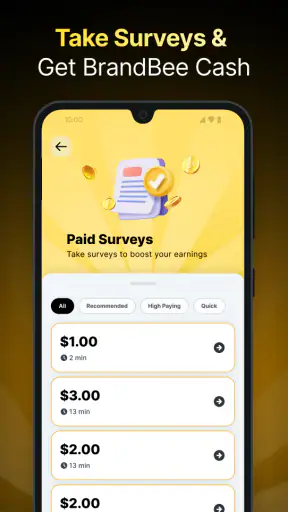
I would use BrandBee when I have a few minutes to spare, such as while waiting for an appointment or taking a break. Surveys are a natural fit for those short windows because I can decide quickly whether I have enough time to finish one. Receipt scanning makes more sense after shopping, while games require a different kind of commitment. The app’s variety is useful because I am not forced into one routine, but it also asks me to choose carefully rather than tapping every offer without reading the conditions.
A practical habit is to check the activity details before beginning. A short task can be a good match for a brief wait, while a longer activity may be frustrating if I need to leave halfway through. I also prefer to keep receipts organized until I am ready to scan them, instead of opening the app repeatedly with a pocket full of crumpled paper. That small change makes the experience feel more deliberate and reduces wasted time.
What happens when I use several earning methods
BrandBee becomes more demanding during heavier use when I move between surveys, games, and receipt-related tasks in one session. Each activity has a different rhythm. Surveys need attention and accurate answers, games can keep me engaged for longer, and receipt scanning depends on having a readable document available. The app is therefore not heavy in the same way as a large entertainment title, but switching between these modes can make the session feel busier than the simple store summary suggests.
I would not begin a survey just before I need to leave, especially if the task appears to ask for detailed responses. My better workflow is to reserve uninterrupted time for surveys, use receipt scanning after a shopping trip, and treat games as optional filler when I actually want that type of activity. This separation helps me judge whether an offer is worth my time instead of mixing every possible earning method together.
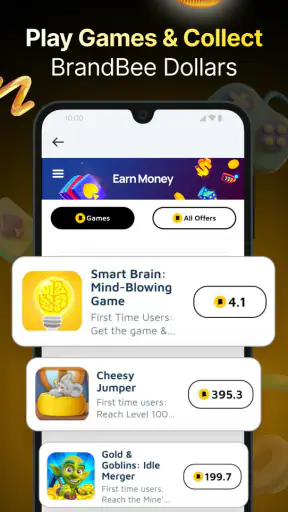
Another useful trade-off is attention. A game may feel less tedious than a questionnaire, but it can consume more of my time before I see a meaningful result. A receipt task may be faster when I already have the receipt in hand, yet it is less convenient if I have to search for old paperwork. BrandBee gives me choices, but it does not remove the need to compare effort against reward.
Stability and the importance of finishing cleanly
For a rewards app, reliability is more than opening without a crash. I also care about whether an activity reaches its proper ending, whether my progress appears to have been recognized, and whether I know what to do next. Because BrandBee connects different task types inside one app, I pay particular attention to the transition after completing a survey, scanning a receipt, or leaving a game.
My advice is to avoid closing the app immediately after submitting something important. I would wait for the completion screen or visible confirmation before switching away. That is not a claim about a hidden technical rule; it is simply a sensible recovery habit for any app that records task progress. If a connection becomes unreliable, repeating taps or resubmitting information can create confusion, so I would first return to the activity area and check whether the task already appears completed.
This kind of cautious workflow is especially relevant when I am using the app in a crowded place or on a weak connection. A rewards task is rarely worth rushing through. I would rather pause, confirm the current state, and continue once the app responds than assume that a second attempt is harmless.
Recovery when a session is interrupted
Everyday interruptions are unavoidable. A phone call, a low battery warning, or simply needing to close the app can break a session. BrandBee is easier to use when I treat each activity as a separate commitment instead of assuming that every task will be waiting exactly where I left it. Before starting, I consider whether I can finish the activity in the time available.
If I am interrupted, I reopen the app calmly and inspect the relevant activity area rather than immediately starting something new. I also avoid relying on memory for receipt details or survey answers. Keeping the original receipt nearby and answering consistently is more practical than trying to reconstruct information after an interruption.
This is one of the less obvious differences between a rewards app and an ordinary casual app. In a casual app, losing a few minutes may not matter. In BrandBee, the value of the session is connected to completion, so my own habits have a noticeable effect on how reliable the experience feels. The app can offer opportunities, but I still need to protect the time and information involved.
Older phones and the minimum software requirement
The application requires Android 7.0 or later, so device compatibility is not unlimited. That requirement is important for anyone using an older phone or keeping an older operating system for practical reasons. Before planning to rely on BrandBee, I would check the phone’s Android version rather than assuming that a basic device is automatically supported.
On a compatible phone, I would expect the demanding part of the experience to come less from graphics and more from the activities themselves. Games may keep the screen active for longer, receipt scanning may depend on the camera and lighting, and surveys require sustained interaction. A phone with limited battery life can make longer sessions inconvenient even if the app itself is not a major resource burden.
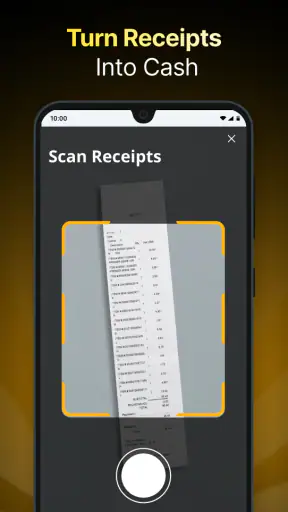
For receipt scanning, lighting and positioning are likely to matter more than raw processing power. I would place the receipt on a flat surface, remove folds where possible, and check the captured image before moving on. This is a concrete way to reduce failed attempts without blaming the app for an unreadable piece of paper. It also makes the feature more useful than simply taking a quick, blurry picture.
Choosing the right activity for the situation
The strongest part of BrandBee is the ability to match an activity to my available time. If I have only a short break, I would look for a survey that clearly fits that window. After grocery shopping, I would handle the receipt while it is still easy to find. If I want something more recreational, I would consider the game-based option, while remembering that entertainment value and earning efficiency are not necessarily the same thing.
This makes the app a better fit for people who dislike committing to one reward method. A survey-only service can feel empty when no suitable questionnaire is available. A receipt-only tool is useful only after shopping. BrandBee’s broader mix gives me more ways to check for an appropriate task, although variety does not guarantee that every option will be equally attractive at every moment.
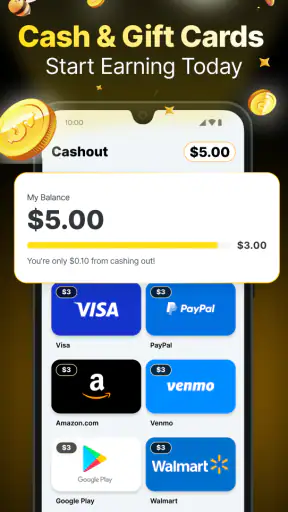
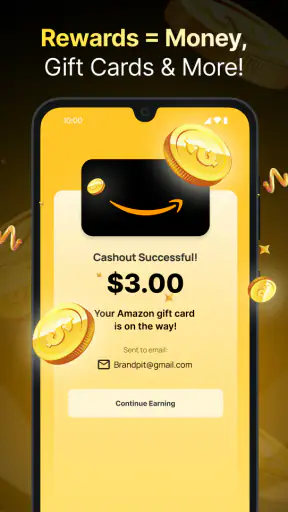
I would also keep expectations realistic around gift cards. The app’s purpose is to earn rewards, but the practical value depends on how often I find worthwhile activities and how much time I spend completing them. I would not install it expecting instant results. Instead, I would let small balances accumulate through activities I would genuinely be willing to do, and I would stop if the time cost starts feeling unreasonable.
Who should use it and who should skip it
BrandBee suits people who enjoy trying different reward activities and can use spare moments without needing a fixed schedule. It is particularly appealing if I already scan receipts, occasionally answer surveys, or like the idea of combining those habits with games in one place. The free price also makes it easy to test without committing money upfront.
I would be more cautious if I dislike questionnaires, do not keep receipts, or want a predictable hourly return. Someone who needs dependable income should choose a more structured work option instead. Likewise, anyone who finds reward tracking stressful may prefer a simpler app focused on one task, even if that means fewer activity choices.
The mature age rating of 17 and over is another reason I would not present it as a general family app. Adults should make their own judgment about the activities and information they are comfortable providing. I would read each task carefully and avoid sharing anything that feels unnecessary for the particular activity.
Version, longevity, and what the numbers suggest
The current version is 3.51.2, and the app was released on August 18, 2013. That long presence gives BrandBee more history than a newly launched rewards experiment, while the current version indicates that it continues to be maintained as an active product. I would still judge it by my present experience rather than assuming that a long release history guarantees perfect performance on every phone.
The rating activity also provides useful context: there are around 21 thousand written reviews alongside the broader rating total. I see that as evidence of substantial user engagement, but not as a promise that every task will suit me. Rewards apps naturally produce varied opinions because availability, patience, shopping habits, and expectations differ from person to person.
When comparing it with the usual alternatives, BrandBee’s advantage is convenience through variety. A single-purpose survey app may offer a more focused workflow, and a dedicated receipt app may feel more natural immediately after shopping. BrandBee is more useful when I want one place to check several possibilities, but less ideal when I already know that I only want one specific type of reward activity.
My performance verdict
After looking at the way the app fits into real routines, I see BrandBee as a flexible rewards companion rather than a high-speed earning machine. Its perceived performance depends on selecting the right task, having enough uninterrupted time, and completing each step carefully. That is why I would measure success by convenience and consistency, not by how quickly I can tap through the interface.
The app’s free access, broad selection of activities, and established presence make it reasonable to try for adults who are comfortable with the mature rating and the Android requirement. I especially like the option to switch between surveys, games, and receipt scanning when my schedule changes. The main limitation is that the variety also creates uneven value: one activity may fit my situation while another may take too long or feel less worthwhile.
My recommendation is to install it with a small experiment in mind. Try one activity during a quiet moment, scan a receipt when you already have one available, and note how much attention each option demands. If the process feels manageable, BrandBee can turn otherwise idle time into occasional rewards. If you need guaranteed earnings, minimal interaction, or a single highly specialized workflow, a different type of app will probably serve you better.
Overall, Embee Mobile has created a practical Lifestyle app for people who prefer choice over routine. I would keep it available as an occasional option, not build my budget around it. The best results come from treating every task as a time trade-off: choose activities that fit naturally into your day, finish them carefully, and let the rewards be a bonus rather than the reason to force yourself through an unsuitable session.


